English Collocations in Use PDF: A Comprehensive Guide
English Collocations in Use, available in PDF format, is a valuable resource for learners aiming to enhance their fluency and accuracy.
Several editions,
like those from 2005 and 2017,
offer explanations and practice exercises,
catering to various English proficiency levels – from intermediate (B1-B2) to advanced (C1-C2).
What are English Collocations?
Collocations are combinations of words that frequently appear together in the English language, sounding natural to native speakers. They aren’t necessarily grammatically fixed rules, but rather habitual pairings. Think of words that ‘just go together’ – for example, “strong coffee,” not “powerful coffee,” or “make a decision,” not “do a decision.”
Understanding and utilizing collocations is crucial for achieving fluency and sounding more natural when speaking or writing. While a sentence might be grammatically correct with less common word choices, it can sound awkward or unnatural. Resources like English Collocations in Use, particularly in PDF format, specifically target this area of language learning.
These resources help learners move beyond simply knowing individual words to understanding how they function together, improving both speaking and writing skills. Mastering collocations is a key step towards expressing yourself with greater precision and authenticity in English.
Why Use a Collocations Dictionary?
A collocations dictionary, such as those accompanying the English Collocations in Use series (often found in PDF format), is invaluable for language learners. Traditional dictionaries primarily focus on individual word meanings, but they often lack information on typical word partnerships. This is where a collocations dictionary excels.
Using one helps avoid awkward phrasing and improves the naturalness of your English. It reveals which words commonly occur together, preventing errors that native speakers wouldn’t make. For example, knowing to “heavy rain” instead of “strong rain” demonstrates a nuanced understanding of the language.
Resources like the PDF versions of English Collocations in Use provide targeted practice and explanations, accelerating the learning process. They bridge the gap between grammatical correctness and fluent, idiomatic expression, ultimately boosting confidence in communication.

The “English Collocations in Use” Series: Overview
The English Collocations in Use series, readily available in PDF format, is a highly regarded resource developed by Michael McCarthy and Felicity O’Dell. It’s published by Cambridge University Press and focuses on teaching learners which words frequently appear together in natural English. The series distinguishes itself through a clear, user-friendly presentation of collocations.

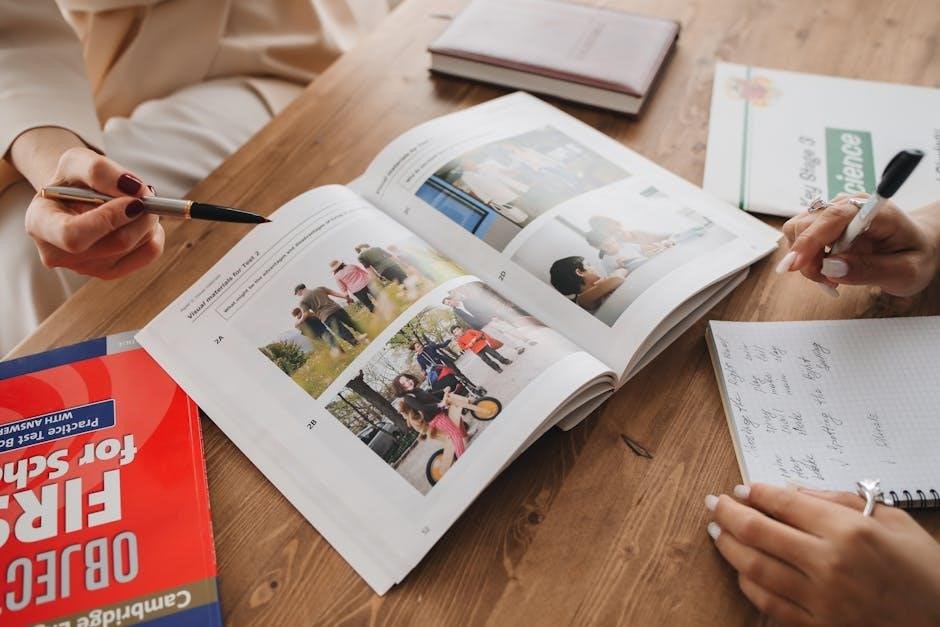
Each unit typically presents new collocations on left-hand pages, accompanied by definitions and examples. Right-hand pages offer targeted practice exercises to reinforce learning. The series mirrors the successful format of the “English Grammar in Use” titles, making it familiar and accessible to many learners.

PDF versions allow for convenient access and portability, enabling study anytime, anywhere. Updated editions, like the 2017 release, reflect current language usage and expand upon the original 2005 content.
Levels of “English Collocations in Use” Books

The English Collocations in Use series caters to a broad range of English learners through distinct levels, conveniently accessible in PDF format. The Intermediate Level (B1-B2) is designed for students consolidating their understanding of common word combinations, building a foundation for more natural expression. It’s perfect for those preparing for B2-level exams.
For advanced learners, the Upper-Intermediate/Advanced Level (C1-C2) delves into more nuanced and sophisticated collocations. This level focuses on refining fluency and achieving a native-like command of the language. Both levels provide explanations and extensive practice.
The PDF format allows learners to easily navigate between levels, focusing on areas where they need the most improvement. Choosing the appropriate level ensures effective learning and maximizes the benefits of the series.

Intermediate Level (B1-B2)
The English Collocations in Use: Intermediate level, readily available as a PDF, is tailored for learners at the B1-B2 CEFR levels. This edition, published in both 2005 and updated in 2017, focuses on building a solid foundation in common English word combinations. It’s ideal for students aiming to improve their overall fluency and accuracy.
The PDF provides clear explanations of frequently used collocations, accompanied by practical exercises to reinforce learning. Topics covered are relevant to everyday situations, enabling learners to apply their knowledge immediately. This level is also beneficial for those preparing for intermediate-level English exams.
The book’s structure, mirroring the successful “English Grammar in Use” series, presents new vocabulary on left-hand pages and practice on the right, facilitating self-study.
Upper-Intermediate/Advanced Level (C1-C2)
The English Collocations in Use: Advanced level, accessible in PDF format, is designed for learners operating at the C1-C2 levels of the Common European Framework of Reference for Languages. This resource focuses on mastering nuanced and sophisticated word combinations, crucial for achieving a natural and fluent command of English.
The PDF edition provides in-depth explanations of collocations commonly used by native speakers, alongside extensive practice exercises. It covers a broad range of topics, equipping learners with the vocabulary needed for academic, professional, and social contexts. This level is particularly helpful for those preparing for advanced English proficiency exams.
The book emphasizes using collocations to enhance both writing accuracy and speaking fluency, moving beyond basic vocabulary to achieve a more polished and idiomatic style.
Key Features of the “English Collocations in Use” Books
The English Collocations in Use books, readily available as PDFs, boast several key features that contribute to effective learning. A prominent characteristic is the presentation of new vocabulary on left-hand pages, immediately followed by focused practice exercises on the right. This format encourages active recall and solidifies understanding.
The books emphasize a thematic approach, grouping collocations by topic – such as ‘eating’ or general academic vocabulary – making it easier to learn and remember related terms. Clear definitions and illustrative examples demonstrate appropriate usage in context.
Furthermore, the series provides a comprehensive range of collocations, covering both common and less frequent combinations, enhancing learners’ ability to express themselves naturally and accurately. The PDF format allows for convenient access and portability.
Book Format and Structure
The English Collocations in Use books, often accessed as PDFs, follow a consistent and user-friendly format. Each unit typically focuses on a specific theme or topic, presenting new collocations on the left-hand page. This page provides clear definitions, explanations of nuance, and illustrative example sentences demonstrating correct usage.
The right-hand page is dedicated to practice exercises designed to reinforce learning. These exercises vary, including gap-fill activities, sentence completion tasks, and rewriting exercises, allowing learners to actively apply their knowledge.
The books are structured progressively, building upon previously learned material. An answer key is included for self-assessment, and a comprehensive index facilitates easy location of specific collocations. The PDF version maintains this structure, offering a digital equivalent of the print book.
How to Effectively Use the PDF Version
To maximize learning from the English Collocations in Use PDF, utilize its interactive features if available, such as clickable links to definitions or audio pronunciations. Regularly review units, focusing on collocations that present challenges.
Actively practice using the collocations in your own writing and speaking. Don’t just passively read the examples; create your own sentences to solidify understanding.
Consider annotating the PDF directly – highlighting key collocations, adding personal notes, or creating flashcards. Supplement your study with online resources and real-world exposure to the language. Consistent, focused practice is key to internalizing these valuable word combinations and improving fluency.
Downloading “English Collocations in Use” PDF
Finding a PDF version of English Collocations in Use requires careful navigation. Several websites offer downloads, but verifying legality is crucial. Be cautious of sites promising free downloads, as these may contain malware or infringe copyright.
Reputable online bookstores and educational platforms sometimes offer PDF versions for purchase. Searching for “English Collocations in Use PDF” will yield results, but prioritize official sources like the Cambridge University Press website or authorized retailers.
Always scan downloaded files with antivirus software. Consider purchasing the PDF to support the authors and ensure a legitimate, high-quality resource. Remember that illegally obtained copies are unethical and potentially harmful.
Legality and Sources for PDF Downloads
English Collocations in Use PDFs are subject to copyright law. Downloading from unauthorized sources is illegal and unethical, potentially exposing you to viruses or malware. Prioritize legitimate avenues for acquisition.
Cambridge University Press is the official publisher and a reliable source, though a direct free PDF may not always be available. Authorized online bookstores like My-shop.ru (mentioned in some sources) may offer purchase options. Educational platforms sometimes include access with course enrollment.
Beware of websites offering “free” downloads; these often violate copyright and pose security risks. Always verify the source’s credibility before downloading. Supporting the authors by purchasing a legal copy ensures continued quality and resource development.
“English Collocations in Use” — Specific Editions & Dates
English Collocations in Use has seen several editions, notably the 2005 and 2017 releases authored by Michael McCarthy and Felicity O’Dell. The 2005 edition, spanning 156 pages, established the book as a core resource for collocation learning.
The 2017 edition represents an updated version, incorporating contemporary language usage and expanding the range of collocations covered. Both editions maintain the successful format mirroring the “English Grammar in Use” series – with left-page presentations of new vocabulary and right-page practice exercises.
These editions cater to different levels, with specific versions tailored for intermediate (B1-B2) and advanced (C1-C2) learners. Identifying the edition date is crucial for ensuring access to the most current linguistic information.
2005 Edition
The 2005 Edition of English Collocations in Use, authored by Michael McCarthy and Felicity O’Dell, marked a significant contribution to English language learning resources. Spanning 156 pages, this edition laid the foundation for understanding typical word combinations essential for fluent and natural English.
It focuses on building a “good knowledge of collocations,” moving beyond individual word definitions to explore how words function together. The book’s structure presents new vocabulary on the left-hand pages, followed by corresponding practice exercises on the right, facilitating effective learning.
While a foundational text, learners should note that linguistic usage evolves; therefore, supplementing with more recent resources is beneficial. Nevertheless, the 2005 edition remains a valuable starting point for intermediate to advanced learners.

2017 Edition (Updated)
The 2017 Edition of English Collocations in Use represents an updated version of the original 2005 release, also authored by Michael McCarthy and Felicity O’Dell. This revision incorporates contemporary language usage, ensuring the collocations presented remain relevant and current for modern English speakers and learners.
Like its predecessor, the 2017 edition maintains the successful format of presentation and practice. New vocabulary and explanations are clearly laid out, followed by exercises designed to reinforce understanding and application. This updated edition builds upon the foundational work, offering a more comprehensive and nuanced view of English collocations.
For learners seeking the most up-to-date resource, the 2017 edition is highly recommended, providing a strong base for achieving fluency and natural-sounding English.
Topics Covered in the Books
The English Collocations in Use series comprehensively covers a wide spectrum of everyday topics, crucial for building practical language skills. These include areas like eating and drinking, where common phrases related to food and meals are explored. Learners will also find dedicated sections on travel, encompassing vocabulary for journeys and accommodations.
Further topics delve into work and study, providing collocations essential for professional and academic contexts. The books also address people and relationships, offering nuanced language for describing individuals and interactions. Communication, health, and environment are also featured, ensuring a broad and versatile vocabulary base.
This thematic organization allows learners to focus on areas most relevant to their needs, enhancing their ability to communicate effectively in diverse situations.
Collocations for Specific Skills
English Collocations in Use doesn’t just present vocabulary; it actively targets skill development. For Speaking Fluency, the books emphasize natural-sounding phrases, helping learners avoid awkward or unnatural expressions. Mastering these collocations allows for smoother, more confident conversations, reducing hesitation and improving overall clarity.
Regarding Writing Accuracy, the series provides guidance on appropriate word combinations for different writing styles. This is vital for producing coherent and professional texts, whether academic essays or business reports.
The exercises are designed to reinforce correct usage, minimizing errors and enhancing the overall quality of written work. By focusing on these specific skills, the books empower learners to use English more effectively in real-world scenarios.
Speaking Fluency
The English Collocations in Use series significantly boosts Speaking Fluency by equipping learners with readily available, natural phrases. Instead of searching for individual words, users learn common combinations, enabling quicker and more fluid speech. This reduces the cognitive load during conversations, allowing for greater focus on content and delivery.
The PDF versions facilitate easy access to these collocations during practice, whether through self-study or language exchange.
By internalizing these typical word pairings, learners sound more authentic and less like they are translating from their native language. The books prioritize collocations used in everyday conversation, ensuring practical application and immediate improvement in spoken English. Mastering these phrases builds confidence and promotes more engaging interactions.
Writing Accuracy
Utilizing the English Collocations in Use PDF resource dramatically improves Writing Accuracy. Learners move beyond grammatically correct but stylistically awkward sentences, adopting phrasing native speakers naturally employ. The books highlight common, and often subtle, word partnerships that elevate writing quality.
The PDF format allows writers to quickly reference appropriate collocations while drafting essays, reports, or emails. Avoiding unnatural combinations prevents miscommunication and enhances clarity.
By consistently practicing with the exercises provided, writers internalize these patterns, leading to more polished and professional-sounding prose. The series helps avoid errors stemming from direct translation and fosters a more nuanced understanding of English expression, resulting in more impactful written communication.
Alternative Resources for Learning Collocations
While the English Collocations in Use PDF series is excellent, several alternative resources complement collocation learning. Online dictionaries like the Oxford Collocations Dictionary provide quick lookups and examples. Websites offering corpus linguistics tools, such as Sketch Engine, allow exploration of real-world language use, revealing frequent word pairings.
Furthermore, platforms like Quizlet and Memrise host user-created flashcard sets focused on collocations, facilitating memorization through spaced repetition. Reading extensively – novels, articles, and blogs – exposes learners to natural language and reinforces collocation knowledge.
YouTube channels dedicated to English language learning often feature videos explaining common collocations. Combining these resources with the structured approach of the PDF books creates a well-rounded learning experience.
Integrating Collocations into Language Learning
Successfully integrating collocations, aided by resources like the English Collocations in Use PDF, requires active application. Don’t simply memorize lists; focus on using new collocations in your own speaking and writing. Keep a vocabulary notebook specifically for collocations, noting context examples alongside definitions.
When reading, consciously identify and highlight collocations you encounter. Attempt to paraphrase sentences, substituting learned collocations for simpler phrasing. Utilize online platforms for practice, actively seeking feedback on your usage.
Regularly review previously learned collocations to reinforce retention. The PDF’s exercise format is ideal for this, but self-testing is also beneficial. Consistent, deliberate practice is key to internalizing these natural language patterns.
Common Mistakes to Avoid When Using Collocations
A frequent error when learning collocations, even with resources like the English Collocations in Use PDF, is direct translation from one’s native language. This often results in unnatural phrasing. Avoid assuming a word’s typical partner in your language will be the same in English.
Another mistake is overgeneralization – applying a collocation in contexts where it doesn’t fit. The PDF highlights specific usage scenarios; pay close attention to these. Don’t force a collocation if it sounds awkward or doesn’t convey the intended meaning.
Finally, neglecting to check for accuracy is detrimental. Always verify your collocation usage with a dictionary or native speaker to ensure natural and fluent expression.

Future Trends in Collocation Learning (2026)
By 2026, collocation learning, even utilizing resources like the English Collocations in Use PDF, will likely see increased integration of AI-powered tools. Personalized learning platforms will analyze a learner’s errors and recommend specific collocations for improvement.
Expect a surge in voice-message based learning, mirroring LinkedIn’s trend (as of March 2025). Learners will practice using collocations in spoken contexts, receiving AI-driven feedback on naturalness and fluency. The PDF will serve as a foundational resource for this practice.

Furthermore, gamification and immersive virtual reality experiences will become more prevalent, offering engaging ways to internalize collocations. Accessibility to updated PDF versions will remain crucial for staying current with evolving language use.